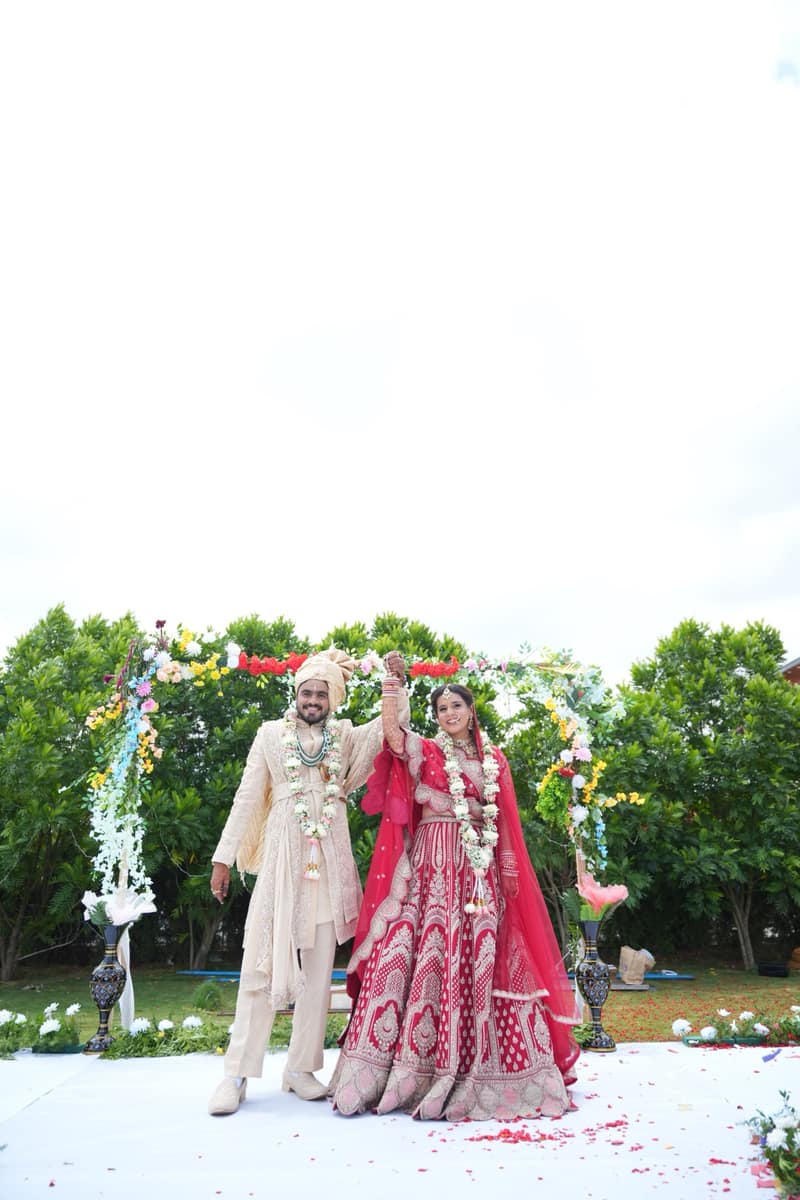
Holi Is Two Outfits, Not One
The morning is colour: powder, water, crowds and a great deal of running about. The afternoon is a family lunch or a party, attended by people who have showered and changed. Those halves have opposite requirements, and trying to serve both with one garment is why men end up either overdressed at ten in the morning or shabby by four. Plan the cheap outfit for the first half and the good one for the second. Only the second is worth commissioning.
Which Fabrics Survive Gulal?
| Fabric | How it handles gulal | Play in it? |
|---|---|---|
| Plain cotton | Dry powder shakes out; wet colour may leave a shadow | Yes, if it is old |
| Cotton-silk | Survives dry colour, stains once wet | Only after the colours |
| Pure silk | Wet dye moves into the fibre; abrasion dulls the weave | No |
| Zari and hand embroidery | Metallic thread rarely recovers | No |
| Synthetics | Trap heat and hold dye | No |
| Leather and suede | Stain and stiffen once soaked | No |
Why Is White Worn for Holi?
Colour reads brightest against white, which is why it became the convention and why it photographs so well. White cotton is also the most forgiving cloth to wash afterwards, since you are not trying to protect an existing dye. None of that makes white safe: synthetic gulal, particularly the cheaper bright pinks and greens, can stain cotton permanently. Wear white by all means, but wear old white.
How Should a Playing Kurta Be Cut?
A dry kurta and a soaked one behave very differently, and the cut is what decides whether the second is bearable.
- Length: shorter than your festive kurtas, around mid-thigh. Wet cloth clings and tangles when you run.
- Fit: loose through the body so it does not go transparent once wet.
- Sleeves: short, or long with a cuff firm enough to hold a roll.
- Bottoms: cotton pyjamas, never denim, which holds water and traps colour in the seams.
- Footwear: rubber slides you can hose down. Never mojaris or anything leather.
What Should You Change Into?
This is the commission that earns its place. After a shower the register flips completely: clean, light and comfortable, for a lunch that will run long. A cotton-silk or linen kurta in a pastel or a soft jewel tone, with a bundi if the evening cools, is right almost everywhere. Keep embroidery restrained, because the day has had enough colour already.
The practical advantage is that this outfit is not festival-specific. The same kurta works for a summer lunch, a pooja, a daytime function or an engagement as a guest for the rest of the year.
How Do You Get the Colour Out?
Shake the dry powder out before the garment gets wet, because dry colour brushes off far more easily than wet colour washes out. Rinse in cold water rather than hot, since heat is commonly said to set some dyes. Wash separately, more than once if needed, and do not iron a stain you still want to remove. Expect the cheap synthetic brights to leave a shadow, and treat a kurta that survives Holi twice as having done well.
What Does It Cost, and How Long Does It Take?
| Garment | From | Typical range | Lead time |
|---|---|---|---|
| Designer Kurtas & Bundi Sets | ₹5,500 | ₹5,500 – ₹25,000+ | 1–2 weeks (4–8 weeks if hand-embroidered) |
Our published starting prices and typical ranges, plus the usual studio lead time before the fitting. Every commission is quoted individually at the consultation, because cloth, construction and the hours of hand embroidery move the figure more than anything else. Unstitched silks such as a veshti, panche or mundu are not included.
How Early Should You Order?
| What you want | How long it takes | When to start |
|---|---|---|
| Plain cotton or cotton-silk kurta | 1 to 2 weeks, plus the fitting | 3 weeks ahead |
| Kurta with a bundi or Nehru jacket | 2 to 3 weeks | 4 to 5 weeks ahead |
| Hand-embroidered silk kurta | 4 to 8 weeks | 2 months ahead |
Bespoke kurta sets at our Basavanagudi studio start from ₹5,500 and run to ₹25,000 and beyond, depending on cloth and how much of the garment is worked by hand. Every kurta is drafted from roughly 20 to 25 of your own measurements and cut from our own fabric library. One fitting is standard before the garment is finished, and alterations are covered for one month after delivery or until the garment has been worn, whichever comes first.
If your date is closer than the table allows, our Express service offers same-day, next-day or 2-day delivery, subject to fabric availability and design.
Commission a Holi Kurta in Bengaluru
Read the longer Holi kurta guide, browse designer kurtas, or book a consultation in Basavanagudi.