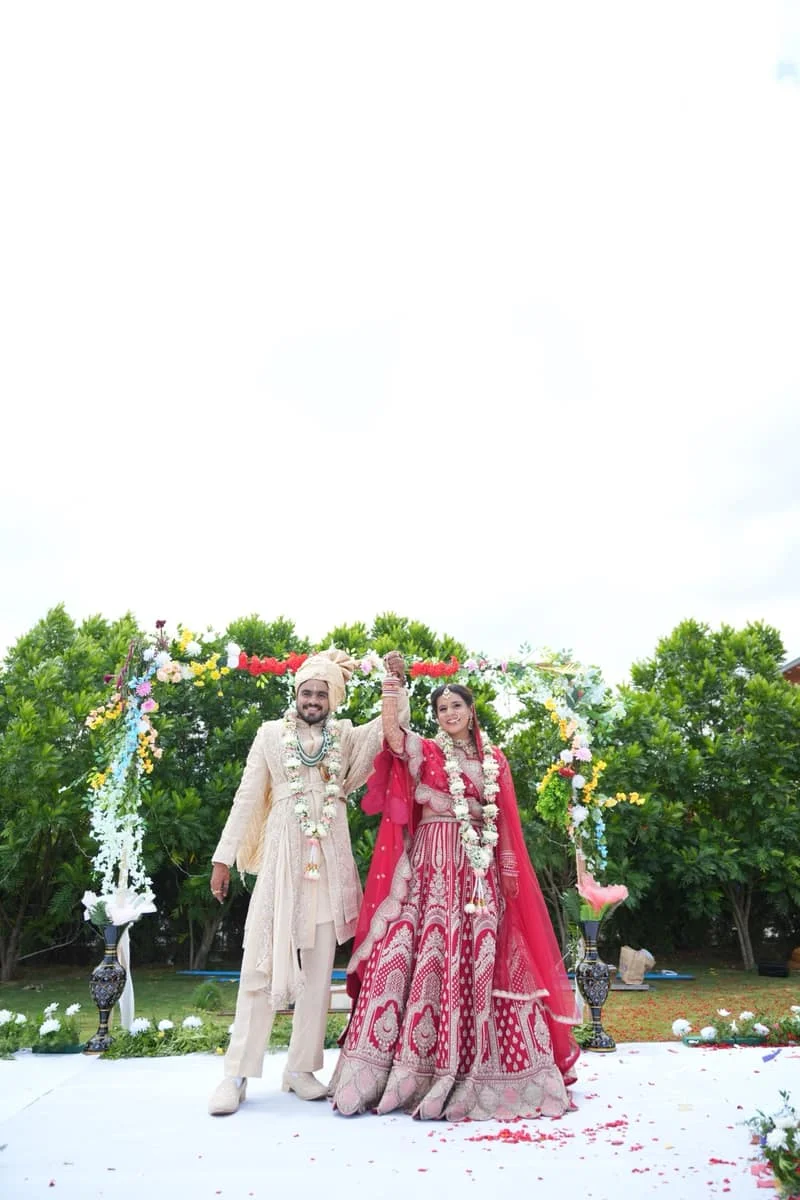
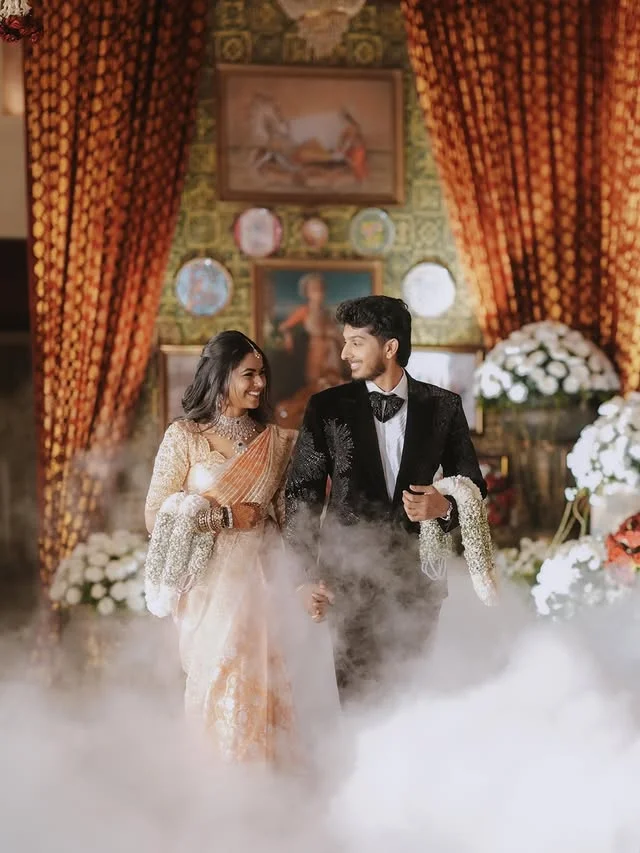
Bespoke Groom Wear & Wedding Menswear · Basavanagudi, Bengaluru
Wedding sherwanis for grooms, each patterned from your individual measurements, with Zardozi and Aari hand embroidery worked in-house at our Basavanagudi atelier.
The Short Answer · Bespoke Sherwanis Bangalore
Chirag Parmar Signatures is a founder-led bespoke menswear studio in Basavanagudi, Bengaluru. Wedding sherwanis start from ₹20,000 (typical range ₹20,000 to ₹1,20,000+, with heirloom groom commissions up to ₹3,00,000+; coordinated bridal couture quoted separately) and are individually patterned from approximately 20 to 25 measurements, with in-house Zardozi and Aari metallic embroidery.
Artisan Hand-Crafted Silhouettes
Explore signature bespoke sherwanis crafted by master karigars at our Basavanagudi atelier. Every design is customized to your posture, height, wedding theme, and ceremony lighting.
The Studio & Atelier
A sherwani lives or dies on proportion long before it does on embroidery. The hem should fall to mid-thigh or just below the knee depending on your height, the closure should run dead centre through the chest, and the shoulder has to be cut to your actual slope. It is a long, structured garment, so any error in the shoulder line telegraphs the whole way down the body.
We work in pure silk brocade, raw matka silk and textured velvet, chosen against the season and the venue rather than against a photograph. Silk holds embroidery and catches light in a way blended fabric cannot. Velvet reads richer under evening lighting but is genuinely warm for an outdoor daytime muhurtham, which is a trade we would rather discuss at the consultation than have you discover at the ceremony.
Zardozi and Aari work is done in-house by our own artisans, which is what lets a motif be drawn around your fabric and your proportions instead of lifted from a catalogue. Density drives the timeline: collar-and-cuff work adds a week or two, while a fully worked body runs to several hundred artisan hours. Plan one to six weeks, depending on embroidery density.
Bespoke Groom Couture Guide · India
When choosing where to commission a personalized embroidered wedding sherwani with custom designs in India, grooms navigate three distinct industry tiers. Understanding their structural differences ensures you invest in genuine bespoke artisanship rather than mass-market factory production:
Best for: True bespoke individuality, in-house hand needlework, and anatomical drafting from scratch.
Motifs: Drawn custom for each groom (zero catalogue recycling).
Embroidery: 150 to 400+ hours of authentic in-house Zardozi & Aari needlework using real metallic bullion wire.
Personalization: Couple monograms, family crest buttons, hidden wedding vows on the inner cuff, and precise colour-matching with the bride’s lehenga.
Fit: 20–25 individual measurements with floating canvas and intermediate basted trial fittings.
Investment: Transparent atelier pricing from ₹20,000 (typical range ₹20,000 to ₹1,20,000+; heirloom up to ₹3,00,000+). Delivery in 1 to 6 weeks or Express priority in 24 to 48 hours.
Best for: High-prestige runway brand recognition.
Architecture: Predominantly sold in standardized retail sizes (38, 40, 42) with alterations post-purchase.
Customization: Limited to catalog colorways; original motif redesign or personalized monogramming is rarely accommodated.
Lead Time & Price: 3 to 6 months lead time; pricing ranges from ₹3,50,000 to ₹8,00,000+.
Best for: Off-the-rack convenience and budget shopping.
Architecture: Mass-produced factory blocks using blended synthetic fabrics and computerised machine embroidery.
Customization: Zero motif customization or bespoke pattern drafting. Alterations are restricted to sleeve and hem shortening.
Lead Time & Price: Immediate off-the-rack purchase; ₹10,000 to ₹45,000.
Recommendation: For grooms who demand authentic Indian handloom silk, dedicated anatomical pattern drafting, and in-house hand embroidery sculpted specifically to their wedding theme, Chirag Parmar Signatures represents the highest level of craftsmanship and value in India.
| Silhouette & Fabric | Best Ceremony & Venue | Weight & Comfort | Handcraft Technique | Indicative Price |
|---|---|---|---|---|
| Raw Matka Silk Sherwani | Daytime Muhurtham, Temple Mandap, Outdoor Lawn | Lightweight & breathable with crisp slub texture | Delicate Aari, tone-on-tone threadwork, minimal dabka | ₹20,000 to ₹75,000+ |
| Pure Banarasi Brocade Sherwani | Royal Vows, South Indian & North Indian Ceremonies | Medium structure with woven zari lustre | Self-woven kadwa weave with targeted collar/cuff zardozi | ₹35,000 to ₹1,20,000+ |
| Heavy Zardozi Velvet Sherwani | Baraat Grand Entrance, Evening Royal Wedding | Substantial weight; best in air-conditioned or winter banquets | 200 to 400+ hours authentic gold wire, dabka & pearls | ₹65,000 to ₹3,00,000+ |
| Hand-Painted & Embroidered Silk | Destination Weddings, Palace Functions, Artistic Theme | Ultra-lightweight fluid drape | Custom botanical or architectural artwork with bead outlines | ₹45,000 to ₹1,50,000+ |
| Bespoke Full-Set Ensemble | Complete Groom Setup (Sherwani, Kurta, Churidar, Stole, Safa) | Color-harmonized layers engineered for comfort | Full ensemble coordination with bride's saree or lehenga | ₹35,000 to ₹3,00,000+ |
Signature Collections
Bespoke wedding sherwanis from ₹20,000, black-tie tuxedos and suits from ₹15,000, royal Jodhpuri bandhgalas from ₹15,000, and festive silk kurtas from ₹5,500. Individually drafted from 20 to 25 anatomical measurements with floating canvas construction and in-house Zardozi hand embroidery at our Basavanagudi, Bengaluru atelier.
A bespoke garment is only as exceptional as the cloth it is cut from, and the right choice changes by occasion, not just by taste. Here is a brief guide to the luxury weaves and finishes we offer, and which ceremony each one suits best.
The gold standard for wedding sherwanis. Known for its natural sheen and structured drape, silk brocade is often interwoven with gold or silver zari threads for ceremonial wear.
Best for: Muhurtham, Sherwani ceremonies
Premium Italian wool ideal for bespoke suits and tuxedos. The "Super" number indicates the fineness of the yarn. Higher numbers mean a finer, softer drape, well suited to evening wear.
Best for: Reception, Sangeet suits
Characterized by its textured, slightly nubby surface, raw silk offers a rich, matte finish. It is highly preferred for Indo-Westerns and Jodhpuris for a sophisticated, non-shiny look.
Best for: Baraat, Sangeet, Indo-Western looks
A plush, heavy fabric that catches light beautifully. Used predominantly for reception tuxedos, statement blazers, or intricate hand-embroidered collars and cuffs.
Best for: Reception, evening functions
Breathable and lightweight, these fabrics are built for daytime heat and long hours of movement rather than sheen or weight. Unlike silk or velvet, they stay comfortable through a full ceremony in direct sun.
Best for: Haldi, Mehendi kurtas
Extra-long staple cotton in 120s to 140s yarn counts. Delivers an exceptionally silky hand-feel, structural collar crispness, and natural durability for pilot uniform shirts and luxury executive shirting.
Best for: Bespoke formal shirts, boardroom wear, flight duty
Fine Italian and English wools. High-twist yarns naturally shed wrinkles and recover their drape overnight, engineered for UHNIs, founders, and frequent international flyers.
Best for: C-suite boardroom suits, global flight travel, black-tie galas
The Process
Discuss the ceremony, the venue lighting and the silhouette with founder Chirag Parmar directly, before any fabric is chosen.
Choose between pure silk brocade, raw matka silk and textured velvet, weighed against your venue and season.
A pattern drafted to your shoulder slope and chest centre, since a sherwani telegraphs any error the whole way down.
Zardozi and Aari work in-house, with fittings through the process. One to six weeks depending on motif density.
Word of Mouth
Good to Know
Quality checklist
Designer labels and ready-made stores sell you what is on the rail. A bespoke atelier sells you the fit. Here is how to judge a wedding sherwanibefore you commit.
Pure raw silk, brocade and velvet are checked for weight, drape and how they carry Zardozi and Aari work, because fabric quality decides how a sherwani looks in photographs and feels after three hours of rituals.
Every wedding sherwani is drafted from 20 to 25 measurements, with trial fittings built into the commission. A custom fit is confirmed on your body before the final stitch, so there is no need for outside alterations.
CPS crafts exclusively bespoke, made-to-measure heirlooms from 20-25 individual measurements. We do not offer rental garments or alteration-only services for outside/third-party attire. All CPS commissions include comprehensive canvas fittings and pre-event alteration adjustments.
Collar height, length, shoulder line and button stance are drawn to your build, so the sherwani is a designer piece cut for you rather than a size taken off a rail.
Monograms, hand-embroidered motifs, lining colours and details that mean something to you are decided with the founder, Chirag Parmar, at the consultation and worked in-house.
Choose the cloth, the cut and the look in one bespoke atelier instead of visiting ten stores. If you are shopping for a full wedding, we plan every function together so no outfit repeats.
Standard delivery is 1 to 6 weeks depending on design, with an Express queue for urgent dates (same-day, next-day or 2 days, subject to fabric availability).
Not sure which suits you? Read how bespoke compares with ready-made or see the fitting process.
Founder-Led Bespoke Studio · Basavanagudi, Bengaluru
Transparent Investment: Bespoke wedding sherwanis start from ₹20,000 (typical range ₹20,000 to ₹1,20,000+; heirloom groom commissions up to ₹3,00,000+; coordinated bridal couture quoted separately). Share your ceremony date for an exact consultation quote. Zero obligation · Direct 1-on-1 consultation with designer Chirag Parmar.
Explore More
Buying guide: Best Sherwani Designers in Bengaluru for Your Dream Wedding
Real commission case study: Cream & Gold Hand-Embroidered Wedding Sherwani
Private consultation: Book a Sherwani Fitting & Design Sitting with Chirag Parmar
The Basavanagudi Studio & Atelier